
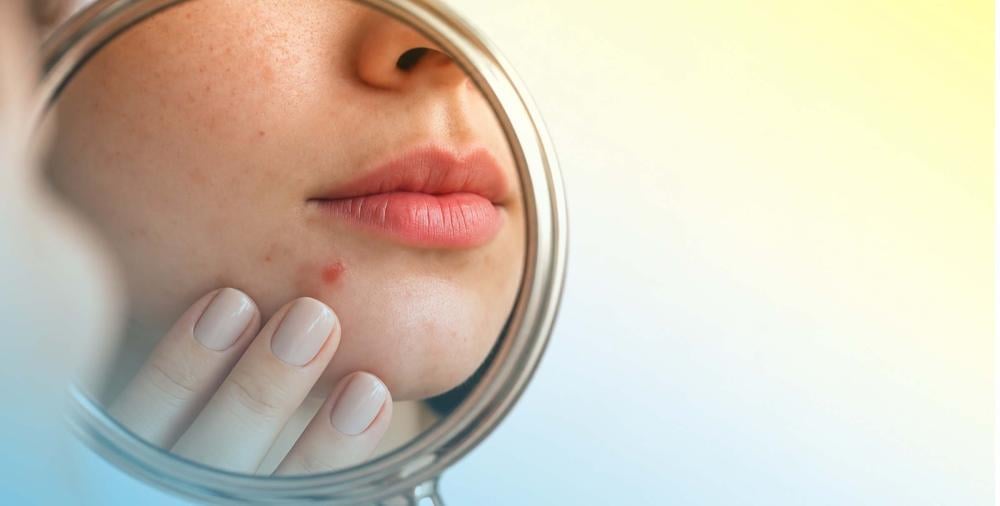
When pimples appear on the face, the first thing that comes to mind is to look for the fastest way to get rid of them.
But before that, we must ask: What is acne and why does it appear in the first place? The truth is that the appearance of these pimples is due to the blockage of skin pores with oils and dead skin cells, which provides an ideal environment for bacteria and inflammation.
There is no single magic formula for acne treatment that suits everyone; what works for one skin type may not work for another.
There is also a big difference between treating active, inflamed pimples and dealing with the pigmentation and scars they leave behind.
In this guide from the best online pharmacy in Saudi Arabia , Ghaya, we take you on a comprehensive tour to understand the nature of your skin, how to treat acne, and how to choose the most suitable routine and treatment for it.
What is acne?
Acne is a common skin condition that occurs when hair follicles (pores) become clogged with oil and dead skin cells. Normally, sebaceous glands secrete sebum to moisturize the skin, but an overproduction of this oil and its accumulation within the pores leads to the appearance of pimples.
With bacteria naturally living on the skin, inflammation may occur in these blocked pores, causing them to swell, redden, and turn into annoying pimples.
What are the causes of acne?
Understanding the triggering factors is the first step in treatment.
Acne has many causes, including both internal and external factors, the most prominent of which are:
- Increased sebum secretion: excessive activity of the sebaceous glands.
- Clogged pores: accumulation of dead skin cells on the surface of the skin.
- Hormonal changes: especially during puberty, menstruation, or pregnancy.
- Genetic factors: Family history plays a role in how susceptible the skin is to injury.
- Using unsuitable products: Some cosmetics and care products that clog pores (Comedogenic).
- Stress and tension: Stress may be associated with worsening acne in some people.
- Medications : Some treatments and health conditions may be associated with the appearance of pimples.
What are the types of acne?
The severity and type of acne vary, and this variation determines the appropriate course of treatment:
- Whiteheads: clogged and blocked pores under the skin's surface.
- Blackheads: Clogged and open pores that turn black as a result of the oxidation of fats when exposed to air.
- Inflamed pimples (papules): small, painful, red bumps that are free of pus.
- Pimples: Inflamed pimples containing white or yellow pus on their head.
- Nodules and cystic pimples: deep and painful lesions, associated with a high risk of scarring, and often requiring evaluation by a dermatologist.
What is the best treatment for acne?
If you are looking for the best acne treatment, you should realize that there is no single absolute answer. The success of the treatment plan depends on several factors, including: the type of pimples, their severity, where they appear, the person's age, skin type, the presence of previous scars, as well as other factors such as pregnancy or planning for it.
topical treatments
Topical treatments are widely used in the treatment of acne, and their selection depends on the type and severity of the acne, such as:
- Benzoyl Peroxide: Works to kill acne-causing bacteria and reduce inflammation.
- Salicylic Acid: Gently exfoliates the skin and prevents clogged pores; it is excellent for blackheads and whiteheads.
- Topical retinoids (such as adapalene): Vitamin A derivatives that accelerate skin cell renewal and prevent clogged pores.
- Azelaic Acid: Antibacterial and helps reduce inflammation and lighten pigmentation.
- Note: The choice of active ingredient depends on the assessment of the condition. These products may cause dryness or mild irritation at the beginning of their use, so their use should be gradual.
Facial acne treatment
The success of facial acne treatment depends on building a balanced skincare routine that protects the skin barrier.
Treating acne on the face involves the following steps:
- Gentle cleansing: Wash your face twice a day with a gentle cleanser.
- Using the treatment: Apply the active ingredient appropriate for your condition.
- Moisturizing: Use a light, non-comedogenic moisturizer (that does not clog pores).
- Sun protection: Use a suitable sunscreen with a light texture.
- Avoid touching: Avoid squeezing the grains completely to prevent spreading infection.
One of the most important rules for treating facial acne is to avoid excessive washing or using harsh physical scrubs, because harsh scrubbing irritates the skin and significantly increases inflammation.
Acne treatment for oily skin
Oily skin naturally produces larger amounts of sebum, making it more prone to clogged pores. When considering acne treatment for oily skin, the focus should be on balancing sebum secretion without harshly drying out the skin.
- Cleansing: Use a cleanser for oily skin that contains ingredients such as salicylic acid to deeply cleanse pores.
- Moisturizing: One of the biggest mistakes is believing that oily skin does not need moisturizing. Leaving it dry will cause it to secrete more oil to compensate; therefore, choose a water-based moisturizer or one in the form of a gel.
- Products: Always make sure to choose products labeled "Oil-free" or "Non-comedogenic".
Treatment of subcutaneous pimples
Blind pimples are bumps that form in deep layers, are often painful, and do not have a visible white head.
- Can it be squeezed? It is strictly forbidden to try to squeeze it, because that causes the inflammation to be pushed deeper into the layers and leads to stubborn scars and pigmentation.
- Caring for it: Gently apply warm compresses to relieve pain and help it drain naturally, along with applying topical treatments specifically formulated for pimples.
- When should you consult a doctor? If it is frequent, very painful, or turns into cysts, medical intervention becomes necessary and over-the-counter treatments are not sufficient.
Acne scar treatment
A clear distinction must be made between:
- Dark or brown spots: Known as post-inflammatory hyperpigmentation, they may gradually improve over time, and sunscreen and some topical ingredients can help manage them.
- Red marks: Color changes that may remain after the inflammation has subsided, and may gradually improve over time.
- Acne scars (Atrophic Scars): Deep scars or changes in skin texture usually require evaluation by a dermatologist, and procedures such as certain types of lasers, peels, or microneedling may be suitable, depending on the type and depth of the scar.
- Warning: If you are pregnant or planning to become pregnant, do not start acne treatment on your own; topical retinoids such as adapalene are not used during pregnancy, and it is advisable to consult a doctor or pharmacist before using any active ingredient.
Treating acne at home
Treating acne at home relies on safe daily skincare and hygiene practices, avoiding unknown remedies that could burn the skin. This includes:
- Cleanse your face gently twice a day and after sweating.
- Avoid squeezing or picking at pimples altogether.
- Avoid excessive use of exfoliants.
- Use products suitable for acne-prone skin that won't clog pores.
- Cleaning tools that come into contact with the face (such as phone screens and makeup brushes).
- Change the pillowcase regularly to maintain a clean environment around the skin.
- Adhering to a consistent routine is important, as the skin needs 4 to 8 weeks to show its response to the treatment.
Acne treatment cream - how to choose the right product?
Instead of randomly searching for "the best acne treatment cream," you should choose a product based on the active ingredient that is appropriate for your type of acne:
- For whiteheads and blackheads: Look for products containing salicylic acid or adapalene.
- For inflamed red pimples: Products containing benzoyl peroxide or azelaic acid are the best choice.
- You can browse the skincare products section on the Ghaya website, and read the labels carefully to choose a formula that precisely targets your problem without overburdening your skin barrier.
A complete acne treatment routine: Recommended products from Ghaya Pharmacy
To implement the skincare routine we explained earlier, Ghaya Pharmacy offers a range of products based on effective medical ingredients to suit various skin needs, divided according to the basic care steps:
First: The cleansing step. Cleansing for acne-prone skin. Gentle cleansing is the most important step to control oil secretions and prevent clogged pores.
Among the available options:
- Vichy Normaderm Phytosolution Gel (200ml): A daily cleanser that combines exfoliating salicylic acid and sebum-regulating zinc, purifies the skin from impurities and pollution, and contains Vichy mineral water that supports the skin barrier without causing dryness.
- Babi Stop Acne Cleansing Gel (200ml): An effective formula containing zinc (0.02%), salicylic acid and cytobiol. This gel helps control excess oil and gently removes dead skin cells to allow the skin to breathe, reducing the chances of blackheads.
- Neutrogena Oil-Free Cleansing Wash (200ml): A trusted option specifically designed to cleanse pores for acne-prone skin, with an oil-free formula that leaves no residue to clog pores.
- Derma Bella face wash and Beesline facial purifying soap : Excellent additional options for daily use, helping to gently purify the skin and reduce the buildup of impurities and oils.
Second: Correcting imperfections and acne scars. After cleansing the skin, the next step is to correct the appearance of acne and reduce the marks it may leave:
La Roche-Posay Effaclar Duo Plus Cream :
It is one of the integrated options for the care of oily and blemish-prone skin. This creamy gel works to open blocked pores and correct the appearance of pimples, and features an innovative complex (Procerad™) that helps resist the appearance of pigmentation and spots resulting from pimples.
Its formula is non-comedogenic, paraben-free, and provides up to 24 hours of hydration, making it an excellent base before makeup.
When do you need to visit a dermatologist?
Since acne is a medical condition, there are signs that warrant booking an appointment with a dermatologist immediately to avoid complications:
- If the acne is severe and full of deep cystic and nodular pimples.
- When experiencing severe pain associated with the pimples.
- If you start to notice scars or pits appearing after the pimples have healed.
- The problem persists and worsens despite using the correct home care routine for several weeks.
- The appearance of pimples is sudden and unusual, especially in adults.
- If acne is negatively affecting your self-confidence and daily life.
Common mistakes when treating acne
Many bad practices can ruin your treatment plan, most notably:
- Grain aging: spreads bacteria and increases the likelihood of scarring.
- Washing your face excessively: strips the skin of its natural oils and irritates it.
- Stacking treatments: Using more than one exfoliating active ingredient at the same time causes burns and damage to the skin barrier.
- Neglecting moisturizing and sunscreen: an indispensable step even with oily skin.
- Impatience: Changing the treatment routine every week does not give the products enough time to work effectively.
Frequently asked questions about acne treatment
What is the fastest way to treat acne?
There is no instant cure for acne. Improvement depends on the type of acne and the treatment used, and acne treatments may take several weeks before noticeable improvement is seen.
What is the best treatment for acne?
The best treatment varies depending on the case; mild cases respond to topical washes and creams (such as salicylic acid and adapalene), while severe cases require prescription medications.
How can facial acne be treated?
By adhering to a daily routine that includes a gentle cleanser, applying an appropriate spot treatment, a light moisturizer that does not clog pores, and sun protection, while avoiding touching the face with the hands.
What is the best acne treatment for oily skin?
Regulate sebum production by using a cleanser containing salicylic acid, using oil-free, water-based moisturizers, and relying on treatments that prevent clogged pores.
How can subcutaneous pimples be treated?
Never try to squeeze it; use warm compresses and apply creams containing salicylic acid or benzoyl peroxide. Consult a doctor if it persists or is very painful.
Can acne be treated at home?
Some mild cases of acne can be managed with appropriate skincare products and over-the-counter topical treatments, while moderate, severe, or non-improving cases require medical evaluation.
How can I get rid of acne scars?
Spots and pigmentation can be treated over time with azelaic acid and retinoids, along with sunscreen. However, deep scars and pits require a visit to the clinic for laser or chemical peels.
When should you visit a dermatologist because of acne?
If the pimples are cystic and painful, leave visible scars, do not respond to over-the-counter treatments, or severely affect your mental health.
In conclusion, the journey to treat acne may require some patience and commitment, but it will certainly pay off when you understand your skin type and choose the most suitable routine for it. Always remember that skincare is not a one-size-fits-all approach; what works for others may not be the best option for you.
Start by identifying the type of pimples, stick to gentle cleansing and moisturizing, and don't hesitate to consult a dermatologist whenever necessary.
At Ghaya Online Pharmacy, we are always keen to provide a variety of options that meet your skin's needs and help you safely restore its freshness and your self-confidence.
Disclaimer: The information in this article is for educational purposes only and is not a substitute for professional medical advice. Please consult your doctor or pharmacist to determine the most appropriate treatment for your condition.